When you press the gas pedal, the engine should respond smoothly and predictably. If the car bogs down, stumbles, or pauses before picking up speed, it feels unsettling and can be tricky to describe. Sometimes the hesitation shows up only once in a while, other times it happens every time you try to merge or pull into traffic.
That hesitation is your engine telling you that something in the fuel, air, or ignition system is not keeping up with your right foot.
What Acceleration Hesitation Feels Like From the Driver’s Seat
Hesitation can show up in a few different ways, depending on what is going wrong. You might feel the engine briefly fall flat when you take off from a stop, then suddenly surge as it catches up. On the highway, you may notice a delay when you try to pass, as if the car is thinking about it before it responds.
Some drivers describe it as a shudder or slight bucking when they hold a steady speed and then add a bit more throttle. Any of these patterns suggests the engine is not getting the fuel, air, or spark it expects when the throttle opens.
From Occasional Stumble to Serious Power Loss
In the early stages, hesitation may only show up under certain conditions, such as a cold start, climbing a hill, or using the air conditioning. You might feel one or two small stumbles and then smooth driving the rest of the trip. As the underlying issue gets worse, the hesitation becomes more frequent, and you may start to notice reduced power or sluggish response all the time.
Eventually, the engine can misfire, the check engine light may start flashing, or the car may struggle to accelerate enough to keep up with traffic. That is the point where the problem has moved from “annoying” into a safety concern.
Common Causes: Fuel and Air Delivery Problems
A lot of hesitation complaints trace back to the fuel and air side of the engine. When we diagnose these issues, we often find one or more of the following:
- A clogged fuel filter or a weak fuel pump that cannot maintain pressure when you step on the gas
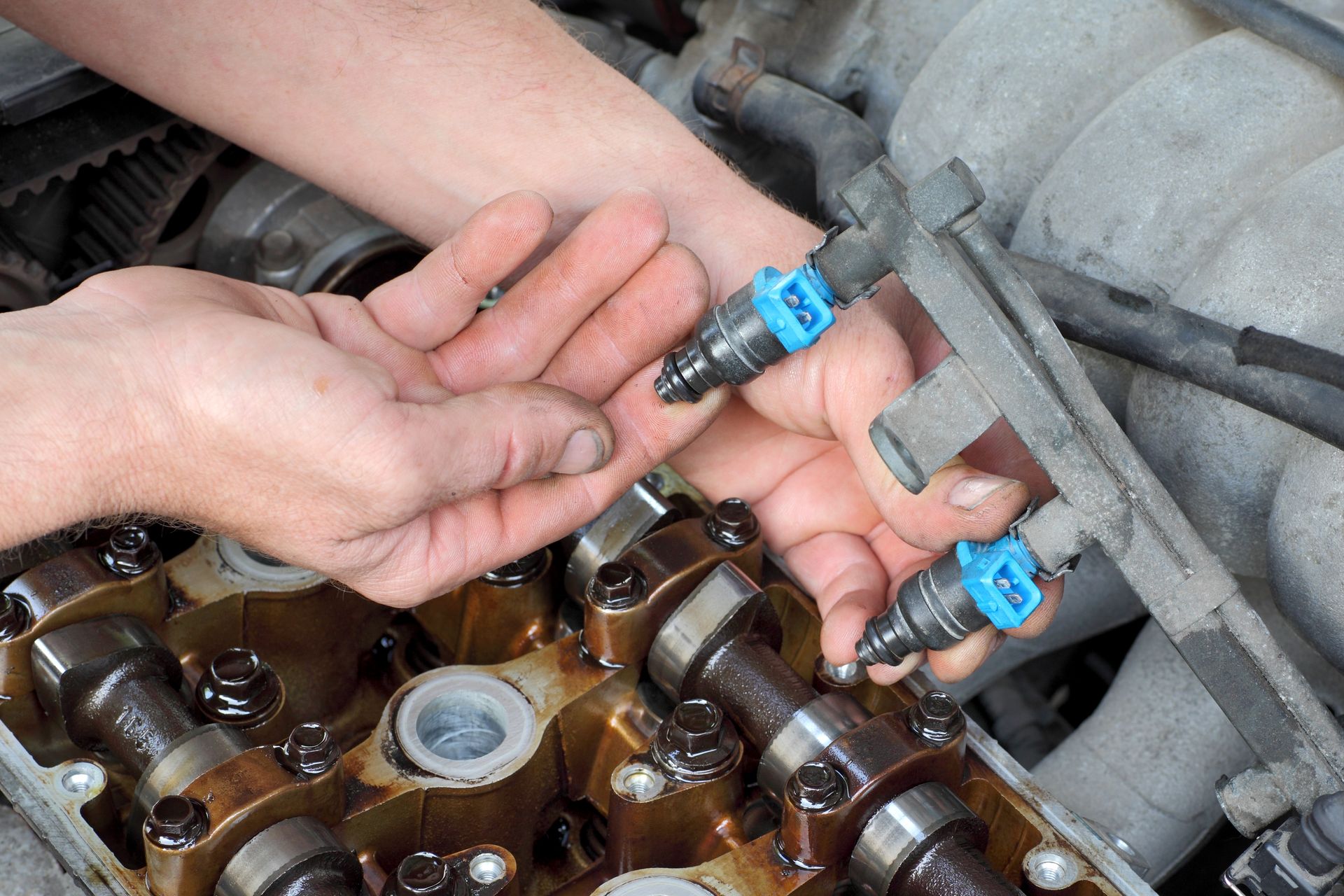
- Dirty or sticking fuel injectors that fail to deliver the right amount of fuel quickly
- A contaminated mass airflow sensor that sends the wrong air flow signal to the computer
- Heavy carbon buildup in the throttle body that interferes with how the throttle opens and closes
Any of these problems can cause a lean condition when you first ask for more power, which feels like a flat spot or stumble. Once the computer catches up and corrects the mixture, the engine may feel normal again, at least for a while.
Ignition and Sensor Issues That Can Mimic Fuel Problems
Hesitation is not always a fuel issue. Weak ignition coils, worn spark plugs, or damaged plug wires can cause misfires right when the engine is under extra load. That is why hesitation can feel stronger when you go up a hill or try to accelerate with passengers and cargo on board. A misfiring cylinder may clear up at lighter throttle, which makes the problem seem random even though it is getting worse.
Engine sensors also play a big role. A failing throttle position sensor, oxygen sensor, or crankshaft sensor can send confusing information that throws off timing and fuel control. The computer may try to compensate, but if the data is too far off, it cannot deliver a smooth power supply. Pulling diagnostic trouble codes and watching live data is usually the fastest way to see whether the issue is fuel, spark, or sensor related.
Owner Mistakes That Make Hesitation Worse
Some common habits and oversights can turn a small hesitation into a bigger and more expensive repair:
- Ignoring the check engine light and driving for months with stored misfire codes
- Skipping basic maintenance like spark plugs, air filters, and fuel system cleaning
- Using low-quality fuel that leaves deposits in injectors and intake valves
- Letting known vacuum leaks, cracked intake boots, or loose hoses go unfixed
Technicians see plenty of engines where a relatively simple maintenance item could have prevented a more serious hesitation issue from developing. Catching these patterns early usually costs less than waiting until the car can barely get out of its own way.
Get Engine Diagnostic in Oneida, NY with Oneida Service Center
We can test fuel pressure, ignition components, and engine sensors to track down what is really causing your car to hesitate. We will explain what we find and recommend repairs that restore smooth, confident acceleration.
Call
Oneida Service Center in Oneida, NY, to schedule a diagnostic visit so you can get your power and peace of mind back on the road.